
Five years of Money-Stress Tracker: Renewed financial pressure driven by cost-of-living crisis
The fifth annual DebtBusters Money-Stress Tracker, conducted in May and June 2026, and attracting close to 18,000 respondents, reveals that the relative stability recorded in 2025 has given way to renewed financial pressures, driven primarily by a mounting cost-of-living crisis.
See results from previous years here.
Rising financial stress
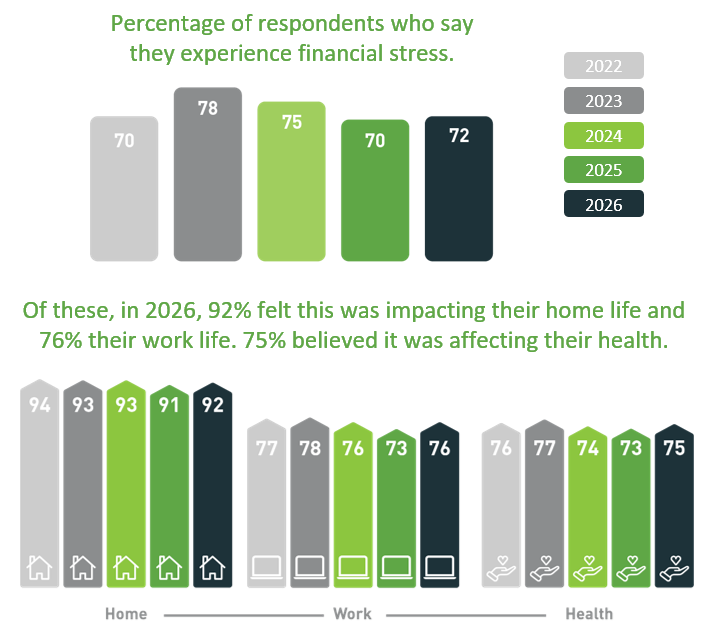
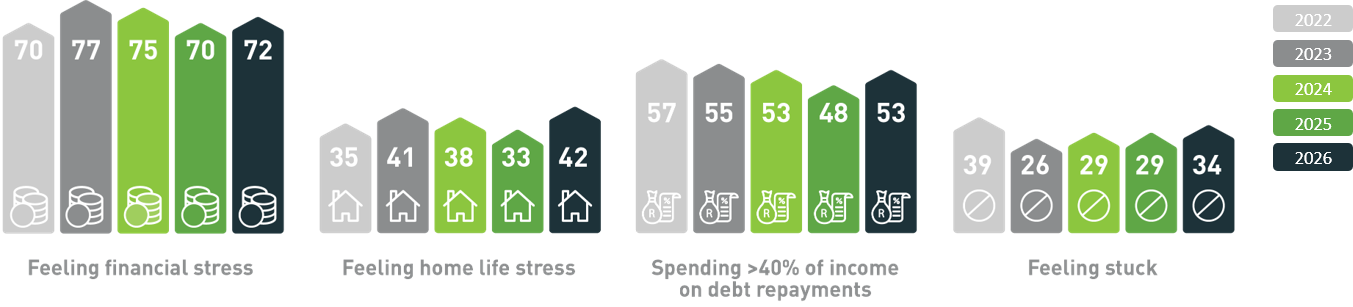
A total of 72% of respondents admitted to experiencing money stress, reversing the slight improvement seen in 2025 (70%). Among those stressed, 92% reported an impact on their home life, 76% on their work life, and 75% felt it affected their health.
Emergence of a cost-of-living crisis
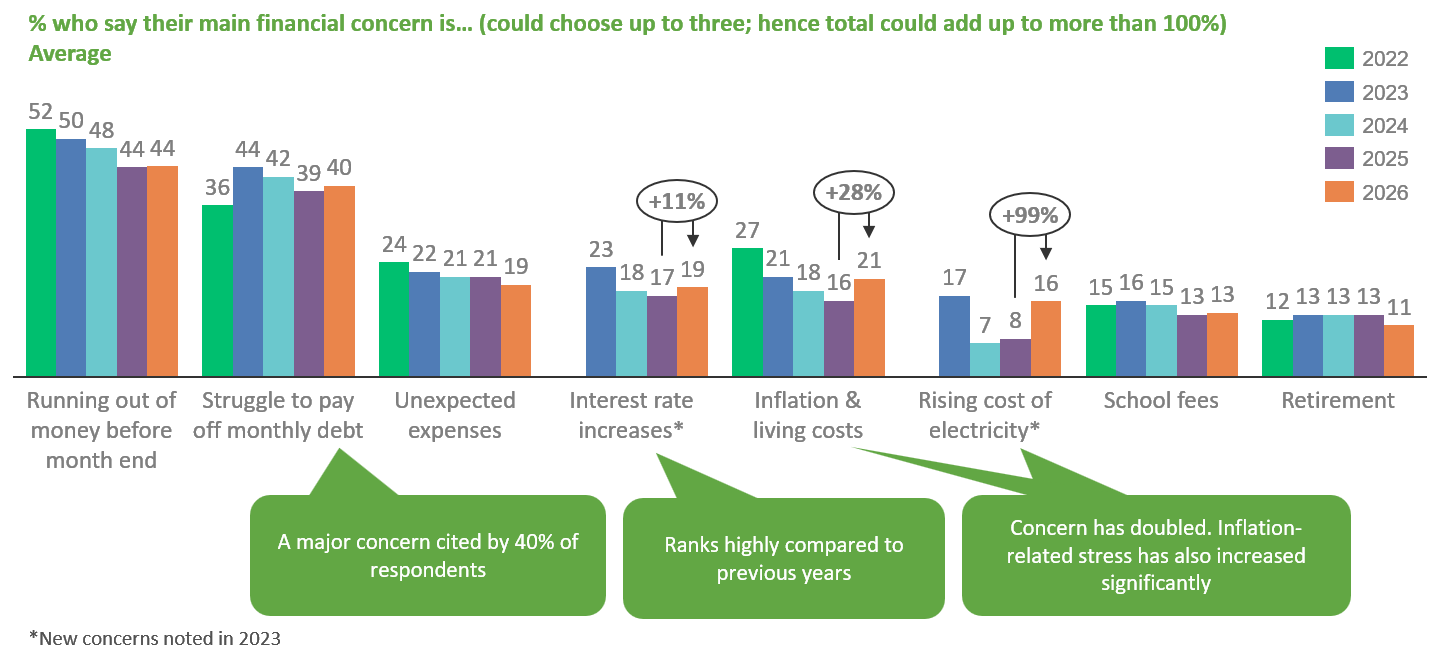
Rising costs emerged as primary drivers of financial anxiety in 2026, especially for lower-income and younger cohorts. The top short-term worries remain running out of money before month-end and struggling with monthly debt payments.
Surge in anxiety among the youngest generation
Young adults aged 24 or younger saw the steepest increase in financial pressure, marking an 18% hike in their composite stress index from the previous year as they enter adulthood in a much costlier environment than previous cohorts.
Unsustainable debt repayment levels
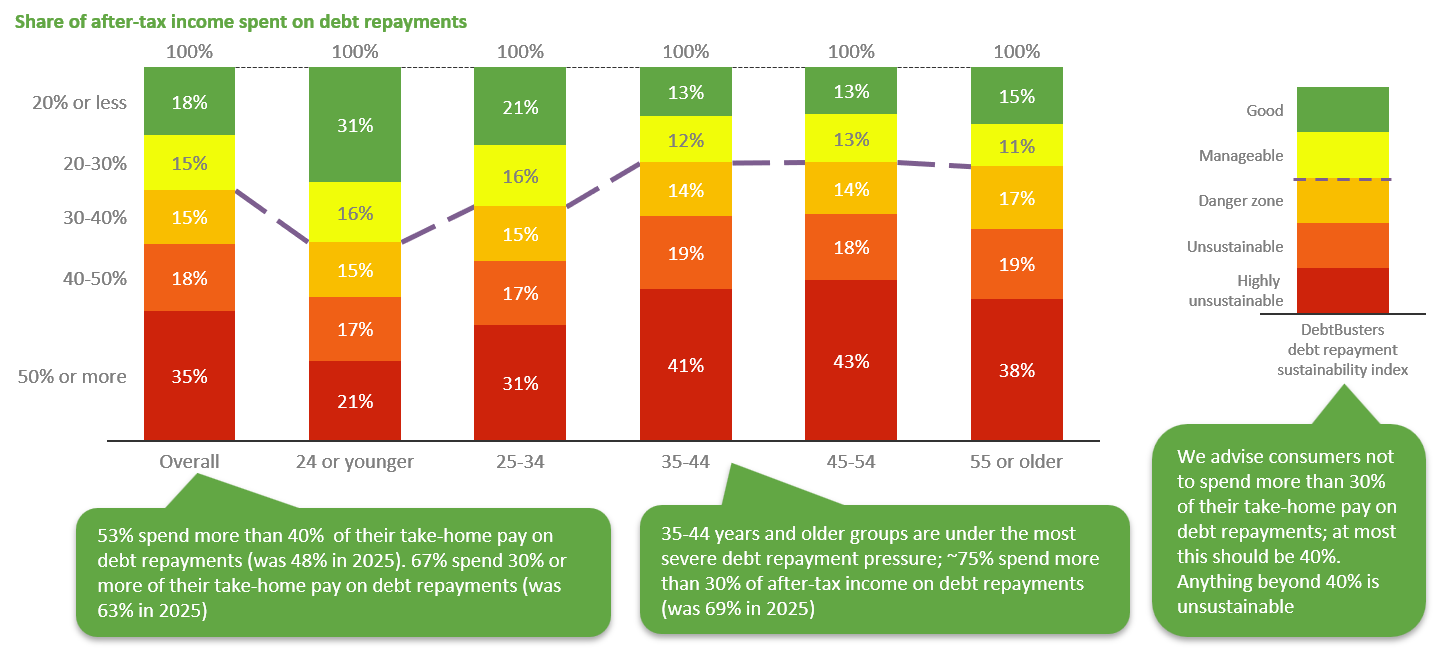
Debt pressure has worsened sharply, with 53% of all respondents now spending more than 40% of their take-home pay on debt repayments (up from 48% in 2025). Middle-aged respondents (35-44 years) face the most severe pressure, with three out of four spending more than 30% of their after-tax income on debt. Middle-class consumers taking home more than R20,000 per month also experience high strain, with 75% exceeding the recommended 30% threshold.
Disproportionate burden on women
Women continue to experience higher stress levels than men across all categories, reflecting a 15% higher level of financial concern than their male counterparts – the widest gap recorded yet. Three out of four women reported financial stress, and their home life stress reached a five-year peak.
Shifts in coping mechanisms and inaction
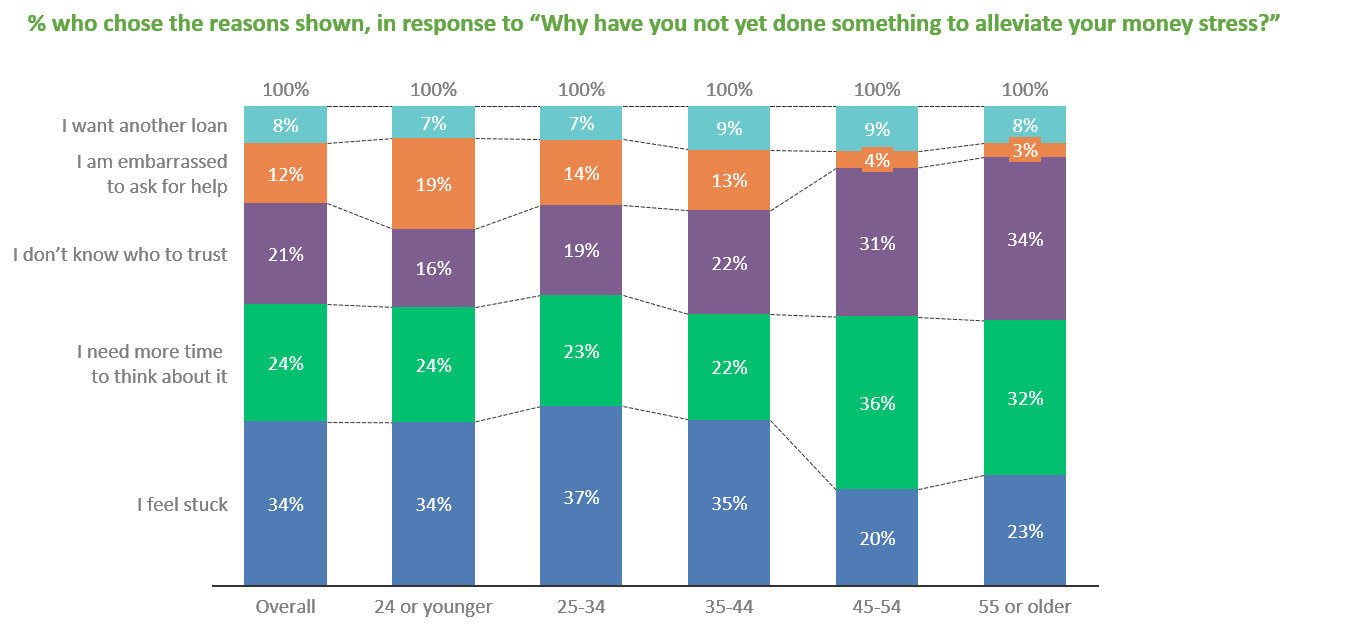
While nearly two-thirds of respondents are taking action to address their stress, signs of “savings fatigue” have emerged, with fewer individuals trying to actively cut back on expenses compared to earlier years. For those failing to take action, "feeling stuck" remained the primary reason for younger and lower-income groups, while older, higher-income respondents cited needing more time to think or a lack of trust in who to approach.
Greater openness to debt counselling
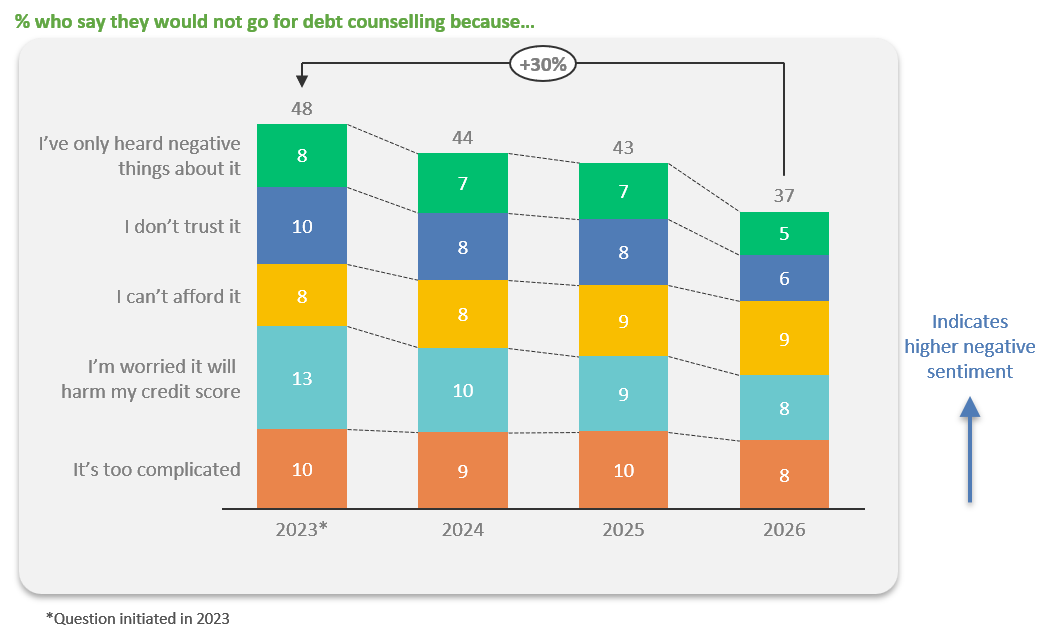
Receptivity toward professional help reached a five-year high, with 16% of respondents actively considering debt counselling (up from 12% in 2025) and negative stigma decreasing by 23% over the last three years. Despite this, an estimated 80% of South Africans facing unsustainable debt still do not seek professional help, pointing to a persistent trust and agency gap.
For many, home is less a haven
Based on over 130,000 survey responses over the past five years, four factors have emerged as the most important indicators of money stress. All are elevated compared to last year. Home stress levels have spiked sharply. This is of particular concern.
The share of survey participants who indicated they are:
Psychological implications
Psychologist Andrea Kellerman notes, “Financial stress is no longer an occasional challenge – it has become a constant psychological state. Concerningly, many homes are no longer functioning as places of emotional recovery. Thus, the nervous system remains in survival mode, increasing emotional exhaustion and conflict, and reducing resilience.
“Notwithstanding, there is reason for optimism. Respondents’ growing willingness to seek debt counselling shows that many South Africans have not given up. Supporting this sense of agency, reducing the stigma around financial assistance and strengthening psychological resilience will remain essential if individuals, families and communities are to navigate South Africa’s ongoing economic challenges.”
Download the detailed results of the 2026 Money-Stress Tracker here.